


Most British gardens hold far more species than their owners realise. The trick to telling them apart is not better binoculars but a simple system: learn one marking and one song per bird, then build from there. Below are the species you are most likely to meet, with the details that actually matter when a bird is flitting through a shrub at speed.
The Little Brown Jobs: Sparrows and Dunnocks
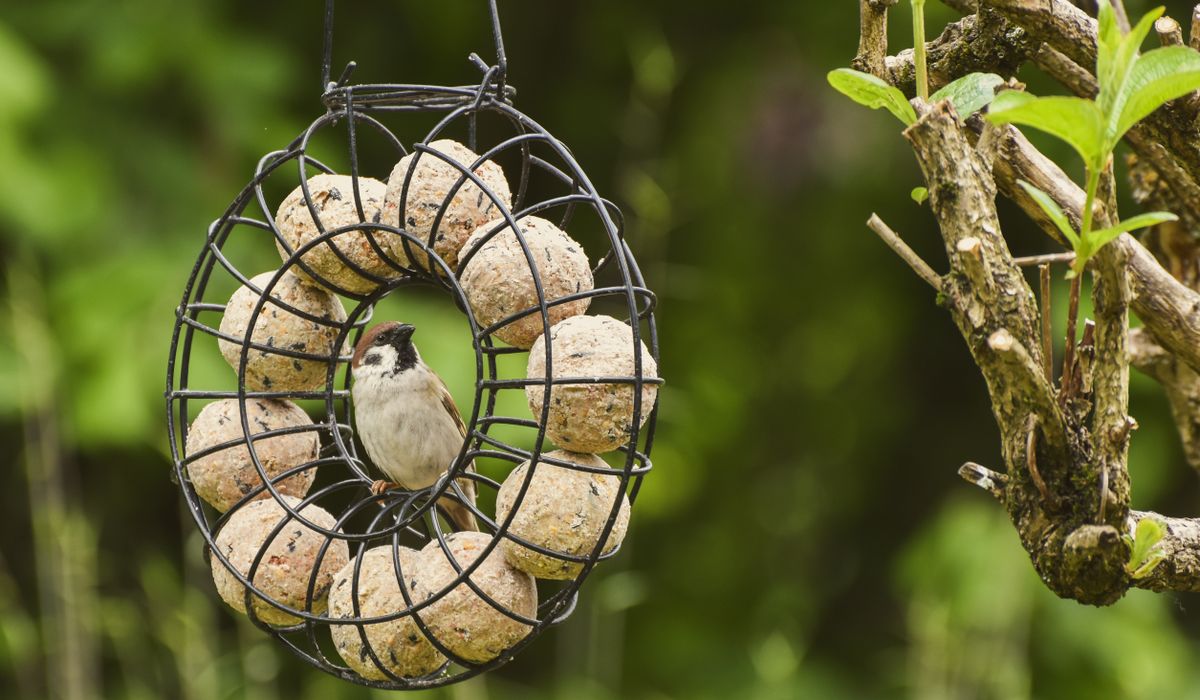
House sparrows are the birds most people see without really looking. The male has a grey crown, a black bib under the chin and a warm brown nape; the female is a plain buffy-brown with a pale stripe behind the eye and no bib at all. They are sociable, noisy and almost always in a group, dust-bathing in dry borders or squabbling over a feeder.
Dunnocks are the ones people mistake for sparrows. Look for a grey head and breast, a finely streaked brown back, a thin, pointed dark bill and pinkish legs. They are slimmer, more mouse-like, and they tend to shuffle along the ground under the feeders rather than feed at height. Their song is the giveaway: a high, thin, hurried warble that speeds up and can sound slightly out of breath, usually delivered from the top of a hedge in early spring.
Finches: Tinkling, Wheezing and a Falling Cascade
Chaffinches are common and easy once you know the marks. Both sexes have a bold double white wingbar and white outer tail feathers that flash as they fly. The male adds a blue-grey cap and a pinkish breast; the female is more muted. Their song is a bright, accelerating cascade that ends with a flourish — often described as a falling series of notes followed by a final flick.
Goldfinches are unmistakable: a red face, a black and white head, a broad gold wingbar and a black tail with white spots. They feed acrobatically on teasels and nyjer, and their call is a liquid, tinkling twitter that sounds like tiny bells. Greenfinches are chunky, greenish birds with yellow edges to the wing feathers and a heavy, pale bill. Listen for a wheezy drawn-out "dzweee" and a nasal "chup-chup-chup" from the top of a tree.
- Chaffinch: double white wingbar, white outer tail, descending song.
- Goldfinch: red face, gold wingbar, tinkling call.
- Greenfinch: heavy bill, yellowish wing flashes, wheezy nasal notes.
- Bullfinch: black cap, white rump, soft piping call; males show a rosy-red breast.
Song Cues Through the Year
You do not need to wait until spring. Birds sing and call all year, and each season teaches you something different.
- January to March: great tits and coal tits start singing. The great tit's two-note "teacher-teacher" is clear and ringing; the coal tit's version is thinner, faster and higher, often "see-see-see".
- April to June: the full dawn chorus. Blackbirds flute from rooftops, song thrushes repeat phrases two or three times, and dunnocks and robins fill the gaps.
- July to September: quieter song, more contact calls — the thin "tsee" of blue tits and the scolding "churr" of a disturbed blackbird.
- October to December: alarm calls and feeding flocks. Learn the sharp "pink" of a chaffinch and the bouncing, undulating flight call of a goldfinch.
Tits and Other Regulars
Blue tits have a blue cap, yellow belly and a white face crossed by a dark line through the eye. Great tits are larger, with a black head, white cheeks, a yellow belly and a bold black stripe down the middle. Coal tits are smaller and greyer, with a black cap and a distinctive white patch on the back of the neck. Watch the feeder hierarchy: great tits usually dominate, blue tits dart in and out, and coal tits often sneak in when the coast is clear.
Robins are worth a mention too. Both sexes look alike — brown above, orange-red breast, and a neat, rounded shape — and they sing for much of the year, including on mild winter nights under streetlights. Their song is a clear, wistful, rippling series of notes, quite unlike the robin's sharp "tic-tic-tic" alarm call.
Practice Makes Perfect
Choose one bird a week and learn it properly. Stand still in the garden for ten minutes at a time, ideally early morning, and watch where each bird feeds, how it moves and what it says. Note the season, the weather and the time of day. Within a month you will recognise most of your regular visitors without thinking, and you will start noticing the unusual ones — a siskin among the goldfinches, or a blackcap singing from the buddleia — that make garden birdwatching such a rewarding habit.


Leave a reply